


Structured Cabling Best Practices for Industrial Operations
When connectivity problems happen on the floor, they usually get bigger fast. A bad cable setup, unclear labels, poor documentation, or an inconsistent installation can slow down production. It can also disrupt scanners, delay shipments, and make extra work for IT. In manufacturing, transportation and logistics, and warehousing and distribution, structured cabling is not just a background detail. It is a big part of keeping operations running.
This guide covers structured cabling best practices for companies planning expansions, retrofits, or infrastructure upgrades. We will explain how structured cabling helps with network setups, access control, and on-site IT support. We will also discuss why a reliable field services partner can help keep projects on track.
Whether you’re an IT manager, infrastructure manager, IT director, part of an operations or facilities team, or simply trying to learn more, these best practices can help you plan cleaner installs, improve documentation, and build infrastructure that can grow with your business.
If you need support implementing these kinds of infrastructure improvements, explore how our team can help deliver efficient, scalable solutions tailored to your environment: contact our team
Why structured cabling matters in industrial operations
 In industrial settings, structured cabling supports much more than office desks. It connects wireless access points, switches, cameras, badge readers, scanners, workstations, and production equipment. If those connections are installed poorly or not documented clearly, problems show up quickly.
In warehouses and production sites, the impact is immediate. A bad cable termination can create scanner issues. A mislabeled cable can slow down a switch replacement. An undocumented run can delay an access control install or a wireless upgrade. Over time, those issues lead to more downtime, more rework, and more frustration for both IT and operations.
That is why structured cabling should be treated like a long-term investment. Good cabling supports growth, makes maintenance easier, and helps standardize performance across one site or many sites.
Start with standards, not shortcuts
One of the biggest differences between scalable infrastructure and reactive infrastructure is consistency. Structured cabling should follow clear standards for labeling, routing, testing, and documentation. Without that, every future change gets harder.
A good cabling standard should explain how to label drops, where to document terminations, how to organize patch panels, and what tests need to be done before handing off the system. It should also define cable pathways, bend radius, separation from electrical sources, and spare capacity for future growth. In warehouses and manufacturing facilities, this matters because layouts change, devices are added, and projects often happen in phases.
For companies with multiple locations, standardization matters even more. If every site is wired differently, support becomes slower and training takes longer. A repeatable structured cabling standard creates consistency across locations and makes it easier to scale.
Plan for expansions and retrofits early
A lot of infrastructure problems begin during expansions and retrofits. New equipment, scanners, automation systems, and security devices all need physical connectivity. If cabling is treated as an afterthought, delays often show up late in the project.
The better approach is to include structured cabling early in the plan. Review current pathways, rack space, PoE needs, spare switch capacity, and future growth before work begins. Identify where new drops, patch panels, or IDF upgrades may be needed. Make sure the design accounts for access points, cameras, access control devices, and future device counts, not just the immediate request.
This is also where network deployments and structured cabling should be planned together. Access points need power and backhaul. Cameras need clean cabling and proper termination. Badge readers and door hardware often need both network and power coordination.
If these pieces are planned separately, rework becomes more likely. If they are planned together, the work moves faster and the results are better. You can learn more about how we support these plans here: commercial IT services
Make labeling and documentation a priority
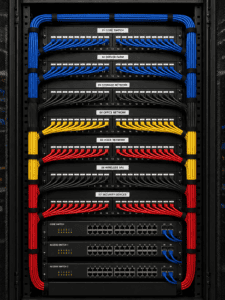 If there is one best practice that saves time later, it is good documentation. In industrial environments, unlabeled or poorly documented cabling causes real delays. Even a simple move, add, or change can take much longer if teams cannot identify cable paths, panel locations, or endpoint assignments.
At a minimum, documentation should include clear cable labels, updated rack layouts, patch panel layouts, as-built drawings, and test results. Photos of completed work also help, especially in larger spaces or when future work may be handled by another technician or vendor. Good records should make it easy for someone to see what was installed, where it ends, and what it supports.
This matters just as much for retrofits as it does for new installs. Older facilities often have years of undocumented changes. Cleaning that up may not seem urgent at first, but it pays off quickly in faster troubleshooting and cleaner expansion work.
Build for wireless, not just wired devices
In warehouse and manufacturing environments, structured cabling supports a large part of wireless infrastructure. Access points depend on correct placement, PoE capacity, and clean backhaul. If cabling is not designed with wireless in mind, Wi-Fi problems often show up later.
That means planning cable runs to support the right number of access points, leaving spare capacity for future APs, and documenting where every run ends. It also means coordinating cable work with wireless design so mounts, switch ports, and coverage plans line up. A warehouse Wi-Fi upgrade should not require last-minute rerouting because cable pathways were not planned early enough.
This is one reason structured cabling and onsite IT support often go together. When wireless problems need physical fixes, such as moving an AP, replacing a damaged run, or testing a questionable termination, fast onsite support makes a big difference.
Support security and access control the right way
Structured cabling also supports physical security. Cameras, badge readers, door controllers, and related systems all depend on clean, reliable connectivity. If access control or surveillance devices are installed without strong cabling standards, future support becomes harder.
Plan security-related cabling with the same care as the rest of the network. Label and document runs clearly, confirm PoE requirements, and separate security systems where needed. Coordinate access control work with network and cabling teams so security devices are not added late without proper planning. In many industrial projects, that coordination helps prevent delays at go-live.
For sites expanding security coverage, it also helps to work with a partner that can support both cabling and access control, so the work is checked from end to end.
Think beyond the install
Good structured cabling is about more than a clean install on day one. It should make future support easier. That includes patching changes, switch upgrades, AP additions, troubleshooting, and multi-site rollouts. The real question is not just whether the install looks good today. It is whether the environment will still be easy to manage two years from now.
That means leaving spare capacity, using consistent rack layouts, documenting cable IDs clearly, and keeping pathways organized. It also means thinking ahead about what internal IT teams will need later. A responsive infrastructure partner should install with long-term use in mind, not just short-term completion.
For IT managers and infrastructure managers, this kind of planning matters. It lowers support effort, speeds up future changes, and reduces the chance that the next project starts with cleanup.
What to look for in a structured cabling partner
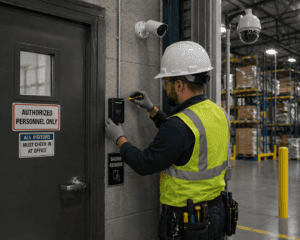
Not every cabling vendor is prepared for industrial environments. A strong partner should understand production schedules, warehouse layouts, and the practical needs of operations teams. They should know how to work in active environments without causing extra disruption. Just as important, they should communicate clearly, document the work well, and support both projects and follow-up needs.
Look for a partner who can handle structured cabling as part of a wider infrastructure scope, including network deployments, access control, and onsite IT support. That matters because industrial projects rarely stay in one lane. A cabling project often leads into device deployment, switch changes, access point installs, or post-install troubleshooting.
At Granado Technologies, that is how we support industrial teams. We work with manufacturing and logistics companies to provide responsive onsite IT infrastructure support, from structured cabling and wireless to cameras and access control, so internal IT teams and other vendors do not become bottlenecks. If you want to explore how these infrastructure and field service practices help eliminate IT bottlenecks in real-world environments, check out our pillar blog here: Removing IT Bottlenecks with Quick IT Field Services
A case study worth reviewing
One useful example of disciplined infrastructure modernization is the Enterprise Multi-Facility Cabling Modernization project in New Jersey. This effort centers on a full structured cabling redesign across a mixed-use commercial environment, including warehouse, office, and security systems. It highlights the importance of standardized MDF and IDF architecture, strong cable management practices, and adherence to industry standards to support long-term scalability.
The project demonstrates how consistent design, thorough labeling, and forward-looking capacity planning create a reliable foundation for expanding technologies such as wireless, IoT, and integrated security systems. It is a solid example of how complex facilities benefit from structured, repeatable infrastructure practices and well-documented deployments.
Final thoughts
Structured cabling is one of the most important parts of industrial IT infrastructure. When it is planned well, labeled clearly, and documented correctly, it supports cleaner installs, easier troubleshooting, faster expansions, and more reliable operations. When it is handled poorly, problems tend to show up everywhere else.
For manufacturing, transportation and logistics, and warehousing and distribution teams, the goal is not just better cabling. It is better infrastructure execution overall. That includes structured cabling, network deployments, access control, and onsite IT support working together to keep facilities moving.
If you are planning an expansion, retrofit, or infrastructure cleanup, contact us. Our team is here to help.
Author and credentials
By Granado Technologies Team
Granado Technologies delivers onsite IT support, structured cabling, network deployments, and access control for manufacturing, warehousing, and logistics sites. Our team includes certified network engineers and field technicians with experience in single-site and multi-site rollouts.
Continue reading
 IT Infrastructure
 Warehouse Wi-Fi: Planning Around Racks, Aisles, and Mobile Devices
Warehouse Wi-Fi: Planning Around Racks, Aisles, and Mobile Devices Warehouse wifi planning connects wireless design to work on the floor. Scanners must remain connected from receiving through shipping.…
 IT Infrastructure
 How to Standardize Network Upgrades Across Multiple Locations
How to Standardize Network Upgrades Across Multiple Locations Multi-site network upgrade planning helps retail and distributed organizations replace one-off dispatches with a repeatable process. When locations use different…
 IT Infrastructure
 Warehouse Network Infrastructure: How to Keep Scanners, Cameras, and WMS Connected
Warehouse Network Infrastructure: How to Keep Scanners, Cameras, and WMS Connected Warehouse network infrastructure affects nearly every connected workflow. Scanners need reliable Wi-Fi between aisles. Security cameras need…
Need expert IT, networking, or low-voltage support?
Our team designs, deploys, and supports IT, structured cabling, Wi-Fi, security cameras, and audio-visual systems for businesses across all 50 states — backed by 24/7/365 service and BICSI-certified installers.